

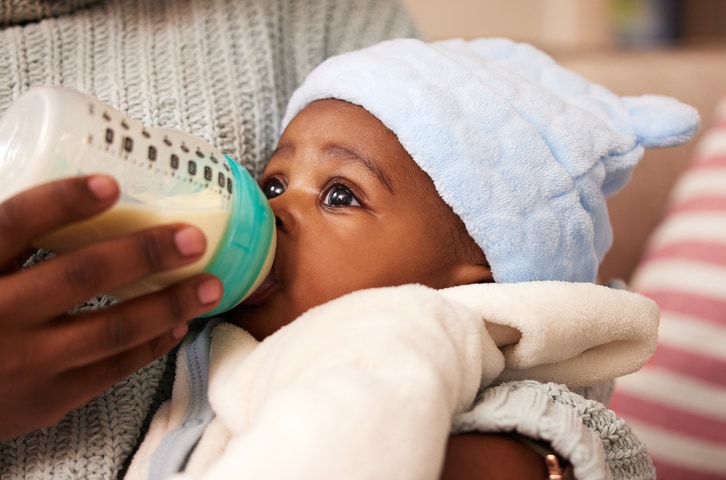
When making a bottle of breast milk for the first time, you’re bound to have lots of questions. For instance, you might be wondering how much milk to defrost for a feeding or which bottle is best for baby. However, safe storage should be your top priority when preparing and feeding breast milk so as to prevent infants from drinking spoiled milk, says Britt Pados, who holds her doctorate in nursing and is the owner and founder of Infant Feeding Care and Infant Feeding Labs.
Unlike parenting, thankfully preparing a bottle of breast milk does come with a handbook. From swirling the bottle instead of shaking, to the proper way to defrost frozen breast milk, here’s your guide on how to make a bottle of breast milk safely.
Is it OK to feed baby breast milk from a bottle?
Breastfeeding offers a multitude of benefits. According to the Centers for Disease Control (CDC), breastfed babies have a lower risk of asthma, obesity, type one diabetes and sudden infant death syndrome. Breast milk contains antiviral and antibacterial elements that lower the baby’s risk of infections and colds. And this is the case whether they receive milk via breast or bottle.
Whether you’re preparing a bottle of formula or breast milk, there are a few basic steps to follow. Pados shares this advice:
1. Wash and dry your hands before handling the bottle or breast milk container to prevent spreading germs to baby.
2. Ensure that you are using a clean bottle every time by following these sanitation standards set by the CDC.
- Separate all bottle parts including nipple, cap and ring.
- Wash items with a bottle brush using warm soapy water in a basin or container used only to clean infant feeding items.
- Rinse all bottle parts and air dry them on a clean towel or bottle rack.
How to make a bottle of breast milk
Here are three simple steps to follow when preparing a bottle, suggested by Pados:
1. You’ll notice that pumped or expressed milk tends to separate and form a fatty layer on top. Instead of shaking up the breast milk, gently mix the breast milk in a swirling motion to avoid breaking down the proteins. Breast milk is made up of living cells that are susceptible to physical damage, so when you shake the milk, this denatures the molecules that help protect the lining of baby’s gut.
2. Next, carefully pour breast milk from the storage bag or container into a clean baby bottle.
3. Breast milk can be given warm or cold. Some breastfed babies prefer a warm bottle of breast milk, because it is similar to the temperature of breast milk when nursing. To warm, you can either use a bottle warmer or you can run the bottle under warm water, ensuring that water does not get into the bottle. Always check to make sure the breast milk is not too hot before feeding it to the baby by testing a few drops on your wrist.
Can you pre-make breast milk bottles?
Pre-making bottles of breast milk is convenient and sometimes necessary. Patti Ashton, an infant care specialist and CEO of Sweet Dreams Infant Care offers her expert advice on common bottle making questions below.
How much breast milk do you put in a bottle?
When it comes to feeding a baby from a bottle, there is no one-size-fits-all answer. The amount you will need to feed your baby will depend on several factors, including your baby’s age, appetite and how much breast milk they are used to drinking. If you are unsure about how much breast milk to put in a bottle, it is best to start with a small amount and then increase the amount as needed.
How long does breast milk last in a bottle?
Freshly pumped breast milk is safe to consume for up to four hours at room temperature.
How long is a breast milk bottle good for after a feeding?
If there is leftover breast milk from a feeding, it must be consumed within two hours to guarantee freshness.
How do you prepare a bottle of breast milk for a night feed?
When your baby is waking for a nighttime bottle, the last thing you’ll want to do is prepare a fresh bottle while you’re half asleep. To make nighttime feedings a little less daunting, you can put a prepared bottle of breast milk in the refrigerator before heading to bed and warm it up under warm running water to take the chill off. And if you’re one of the lucky ones, your baby may not even mind cold breast milk.
How to properly thaw frozen breast milk
To defrost breast milk safely, run the sealed storage bag of breast milk under warm water until all ice crystals are dissolved. Next, swirl the breast milk and pour it into a clean bottle. Thawed breast milk is safe to consume within two hours of defrosting at room temperature or for up to one day if refrigerated.
How to properly store breast milk
When packaging breast milk for the freezer, pour the milk into a storage bag that is labeled with the date and lay it flat in the freezer for space-saving storage. “The CDC says that freshly expressed milk stored in the refrigerator is safe to consume for up to four days and for up to six months in the freezer,” says Pados. “Breast milk should never be re-frozen once it has been previously frozen and thawed.”
Bringing breast milk on-the-go
“Freshly expressed breast milk can be stored in an insulated cooler with ice packs for up to 24 hours when you are traveling,” advises Ashton. “At your destination, use the milk right away, store it in the refrigerator or freeze it.”
“For babies who are doing a combination of breastfeeding and bottle-feeding, it is important that a slow flow nipple be used early on while the infant is establishing breastfeeding skills.”
— BRITT PADOS, DOCTOR OF NURSING AND FOUNDER OF INFANT FEEDING CARE
Tips for choosing the best bottles for baby
When you’re introducing a bottle for the first time, you want to be sure to set yourself up for success by getting the right gear. Here are a few expert tips to consider when selecting your baby’s bottle.
Choose a slow flow nipple
You’ll want to choose a slow flow bottle nipple to replicate what it’s like when nursing. “A slow flow nipple is important as most mothers have a slow flow of milk that comes out while nursing,” says Ashton. “Babies may prefer the flow of a faster nipple and become frustrated with their mother’s slow flow, leading the baby to refuse nursing.”
Pados agrees that a slow flow nipple is best for infants. “For babies who are doing a combination of breastfeeding and bottle-feeding, it is important that a slow flow nipple be used early on while the infant is establishing breastfeeding skills.”
Find a bottle nipple that mimics nipple size
Similarly, choosing a bottle nipple that closely mimics the nursing parent’s nipple is preferred by babies. Bottles and bottle nipples are labeled in stages, from newborn to toddler, so read the packaging carefully when selecting.
Be open to switching it up
All bottles are not created equal. Some babies will be pickier than others, so you may have to try a few different brands until you select the perfect bottle for them, cautions Ashton.
There’s no need to purchase a large bottle in the beginning. Infants won’t drink more than four ounces during a feeding. Be stingy with your liquid gold, cautions Pados. “Pay attention to how much your baby usually takes and don’t put too much more than that in a bottle to avoid wasting breast milk,” she says.
Anytime you’re starting something new as a parent or caregiver, the details can be overwhelming. Keep these expert tips handy, grab a bib and a burp cloth, and remember that “fed is best.”