What’s the dirtiest place in your house? No, it’s not the toilet or even the floors. It’s the people and pets who live in the house, says Dr. Carl J. Fichtenbaum, an infectious disease specialist and professor of clinical medicine at the University of Cincinnati College of Medicine in Cincinnati.
For that reason, he adds, “The most important things to clean in the home are people’s hands. Washing your hands for 20-30 seconds with soap and water — singing the happy birthday song to measure time — is the best way to prevent the spread of germs.”
Val Oliveira, founder and CEO of Val’s Services, a professional cleaning company in Chicago, concurs: “The number one tip to keeping the house clean is: wash your hands as soon as you arrive at home and put things away, such as purses, bags, and shoes.”
But the dirt doesn’t end there. Read on to discover the dirtiest spots in your home — and what you can do to get rid of the griminess for good.
Key takeaways
- The most important home cleaning tip is to wash your hands every time you arrive at home. People and pets are some of the dirtiest parts of the household, and it’s important to keep germs from spreading.
- The next dirtiest parts of the house are ‘high-touch’ places like countertops, handles, faucets, keyboards and remote controls. These should be cleaned with an all-purpose cleaner or disinfectant weekly.
- Bathtubs, showers and toilet bowls also present big cleaning challenges. These should be cleaned weekly, at least, and don’t forgot to clean the outside of the toilet bowl to get rid of dust, hair and grime.
- Lastly, you can also combat dirt and dust by tossing bathroom rugs in the washing machine weekly. Vacuuming in between washes will also keep debris from building up.
What’s the dirtiest place in your house?
1. Kitchen counters and handles
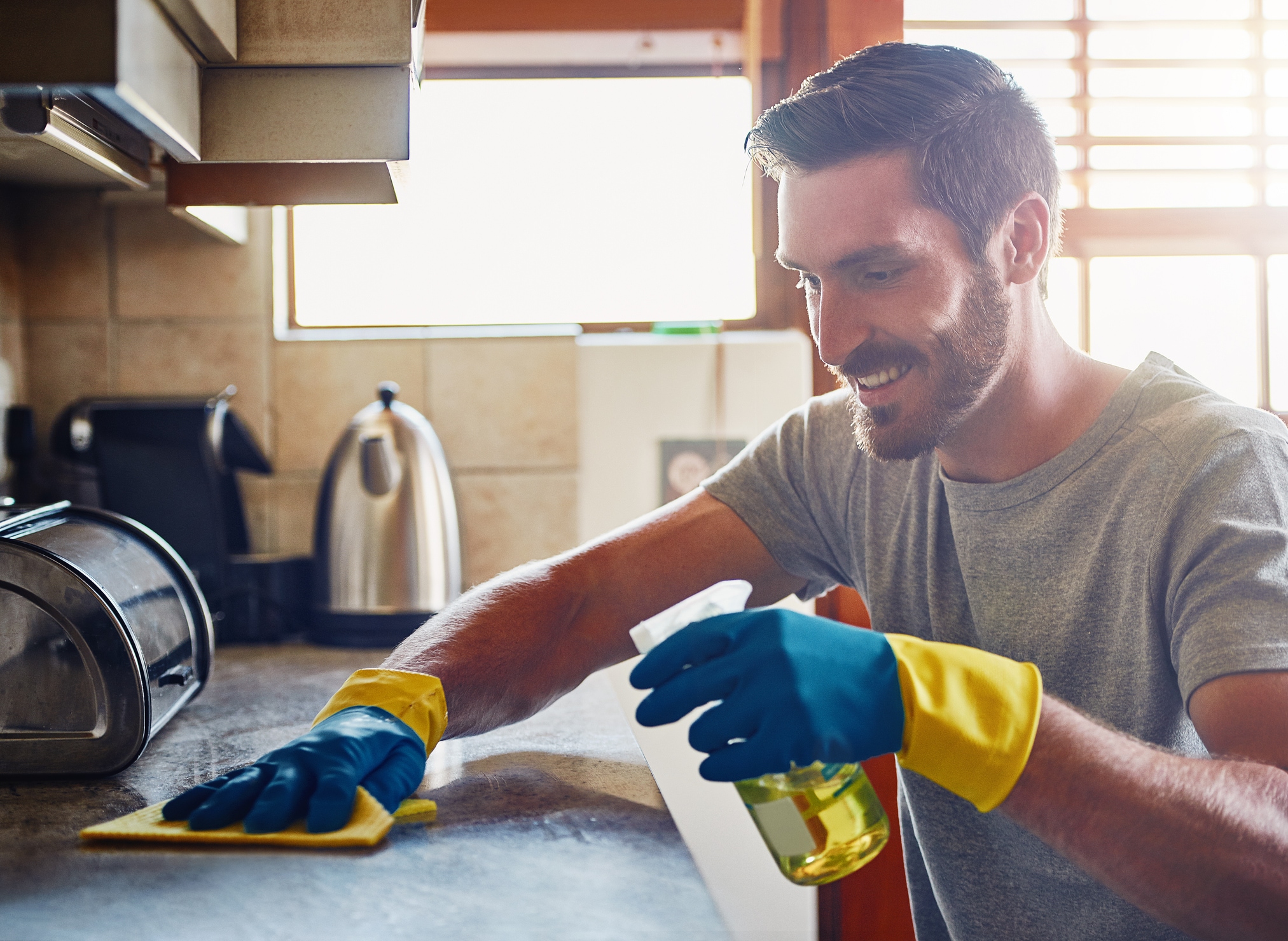
It’s common to think of the stove and fridge as focal areas to clean in the kitchen, but countertops and handles need the same care and attention, says Oliveira.
“On the counter, we place lots of produce, rest bags from outside, create coffee stains, leave crumbs and spill liquids,” she explains. “And while we use cutting boards to cut our meats, vegetables and fruits, it is still possible to have a transfer of bacteria.” The same goes for handles, she adds, since it’s common to reach over to open a drawer and track bacteria or grease onto the handle.
How to clean it
Oliveira advises wiping down these spots with a disinfectant daily.
2. Sponges
While you’re in the kitchen, keep an eye on your sponge, too. “If you start to notice a mildew, musty smell every time you walk into your kitchen, it may be your kitchen sponge,” which can also be home to bacteria, says Juliet Tenaglia, CEO of Bella Cleaning Inc. in Mineola, New York.
How to clean it
Tenaglia’s advice? Run it through the dishwasher weekly, and replace it every month.
3. Dishwashers, washing machines and refrigerator door seals
“Any time you combine water and soap, like in your dishwasher or your washing machine, buildup is going to happen,” explains Mary Cherry, owner of Evie’s Cleaning Company in Pearland, Texas. “Soap and water mix and get trapped in the seals and cause them to become gunky.” In the fridge, seals can get dirty when food and drinks get caught in them, she adds.
How to clean it
To clean these seals, use a combo of warm water, mild soap and a cleaning cloth, Cherry recommends. Try an old toothbrush or soft-bristled grout brush to get “into all the grooves and crevices.” Then, rinse and dry. Repeat this cleaning monthly.
“If you start to notice a mildew, musty smell every time you walk into your kitchen, it may be your kitchen sponge.”
— Juliet Tenaglia, professional cleaner
4. Coffee makers and bottled water dispensers
Pocali says many people use a coffee maker and bottled water dispenser in their daily routine, but both are “often an overlooked place when cleaning the kitchen.”
That can lead to some icky consequences: If there’s stagnant coffee or water, it can grow “mildew or mold and create an unsanitary odor,” she says.
How to clean it
Clean the coffee maker and reservoir in your water dispenser with a sponge, water and dish soap, Pocali advises. Repeat this cleaning after each use.
5. Faucets
When it comes to keeping faucets clean, we’re specifically talking about cleaning underneath the faucets in the kitchen — an area you should pay particular attention to if you drink tap water or cook with it, says Cherry. “Tap water can contain minerals, like calcium, which will cause a hard, crusty buildup on the faucet screen and surrounding components.”
How to clean it
Clear buildup by scrubbing under the faucet with a grout brush, she advises.
“Another option is to put some orange essential oil on an old toothbrush, apply it to the bottom of the faucet and allow it to sit for 15 minutes to break up the buildup,” she says. “Then, scrub with a stiff grout brush and rinse the area thoroughly.”
Once the buildup is gone, a weekly scrubbing with an old toothbrush, soap and water should keep it fresh.
6. The whole toilet bowl
Don’t just pay attention to the inside of the toilet bowl. “The toilet harvests bacteria and stains from daily use inside the bowl, but to most people’s surprise the outer bowl and seat is just as important to clean as the bowl,” explains Oliveira, because that’s where dust and grime can accumulate.
“Dust, hair and dirt collect at the base, sides and behind the toilet, leaving the area dirty,” Cherry adds. And, because it’s often used by multiple people, “the dirt builds up rather quickly,” she notes.
How to clean it
To clean the outer areas of the toilet, Cherry recommends a weekly wiping with a dry cloth or paper towel first (since wet dust and hair can be harder to pick up), and then following up with an all-purpose or bathroom cleaner.
7. Bathtubs and showers
Regular showering leads to “soap scum, water stains, hairs, dirt, rust and grime over time,” Oliveira says. Plus, “every time you shower, you are redistributing that grime and bacteria on anything that comes into contact with the dirty surface.”
When it comes to the bathtub, if it isn’t cleaned regularly, the area is susceptible to drainage backups and discoloration. Also important: “If you have a sluggish drain, that dirty water will sit and stick to the sides and button of the tub and collect every time someone showers,” Pocali says.
How to clean it
Cleaning the tub from top to bottom with a bathroom cleaner and a scrubber should do the trick for everyday dirt, says Tenaglia. “For more stubborn dirt, spray bleach at the top, let it sit for about 10 minutes, then come back to rinse, followed by scrubbing with bathroom cleaner and rinsing again.” She advises wearing a mask and gloves while doing this.
“If you’re cleaning electronics, like a computer keyboard or remote control, you can use a mixture of 1/3 water and 2/3 rubbing alcohol lightly sprayed on a cloth.”
— Mary Cherry, professional cleaner
8. Bathroom rugs
One more troublesome spot in the bathroom: rugs.
“Typically, when you clean your bathroom, you pick up the rugs as part of the routine and then place them back on the floor after you’ve mopped,” explains Cherry. But that neglects the rug itself — which can be full of dust, hair, lotions and other products.
“If you have ever experienced cleaning your bathroom floor only to find hair and particles back on the floor after putting the rugs down, dirty bathroom rugs are the cause.”
How to clean it
Combat dirt and dust by tossing your bathroom rugs in the washing machine weekly. Vacuum in between washes to keep debris from building up.
9. Keyboards and remote controls
Your keyboard may be yuckier than you expect. They can have gunk, hair, dust and more, says Abe Navas, general manager at Emily’s Maids in Dallas.
Cherry categorizes keyboards with other “touch points,” like remotes, light switches and banisters. “Those places tend to be quite dirty because they are touched constantly throughout the day by several people in the home,” she says.
How to clean it
“If you’re cleaning electronics, like a computer keyboard or remote control, you can use a mixture of 1/3 water and 2/3 rubbing alcohol lightly sprayed on a cloth,” Cherry says.
That combo can be used on any of the touch points: Simply clean the spot first (using a toothbrush to get into tough places), and then wipe with the sprayed-on cloth, she says.