In this article
It’s impossible to escape the screen time debate. From parenting groups to dinners with friends to viral videos — it seems everyone has an opinion on how and when kids should have access to technology. For some families, the question is whether to allow any screens at all, while other families choose to explore a life with balanced screen time that gives kids digital literacy skills.
While some parents feel confident in their screen time stance, many admit to feeling uncertain about how to approach the topic. Whether their teen is begging for TikTok or their toddler only calms down for Ms. Rachel, a significant chunk of parents admit they feel conflicted. In fact, 42% of parents said they need a better approach to screens, according to a 2024 Pew Research study.
As the first generation of parents to raise kids in a fully digitalized world, it makes sense that so many parents have conflicted feelings about screens, says Emily Edlynn, a clinical psychologist and author of “Autonomy-Supportive Parenting: Reduce Parental Burnout and Raise Competent, Confident Children.”
“The concept of ‘screen time’ covers so much territory, from television to social media to video games, that whether it’s ‘good for kids’ depends on several factors,” says Edlynn. “However, if we look at screen time broadly as one form of leisure and social connection, using any form of screen time in these ways can be beneficial and enrich children’s lives.”
Key takeaways
- Supervised, age-appropriate screen time can support creativity, connection and digital literacy — especially when paired with adult guidance. Using screens together is a great way to help kids develop safe and healthy habits.
- Family screen rules should be rooted in communication and safety. Rather than only focusing on restrictions, it’s helpful to guide kids in understanding the risks of the internet and how to develop good digital habits.
- Building screen time into a predictable part of kids’ routines and modeling balance ourselves can teach children to self-regulate screen time and tech use as they age.
Can screen time actually be a “good” thing for kids?
Viewing screen time as a way to enrich children’s lives may not be a popular talking point on social media, but Edlynn says there’s good evidence that screen time (with some guidance and ground rules) can be an important part of development. “Some potential benefits of screen time, when supervised at a developmentally appropriate level, include feeling connected with peers.”
The American Academy of Pediatrics has stated that there is no proven benefit to screen time under the age of 2, but that does not inherently imply that all screen time is harmful — to infants and toddlers or to older kids.
To create a balanced view of screens, Edlynn says parents should begin with more rules and guidance for younger children and work towards reducing the guardrails as kids develop digital literacy skills.
“There’s no evidence to support a specific screen time limit,” says Edlynn, “but I often counsel parents to find a good time in the daily routine to integrate screens that helps the parent (e.g., when cooking dinner) and gives a predictability to screens that can help children feel less anxious about having that time.”
“When screens are framed as a tool for learning or creativity, instead of as a reward, a deflection from teaching emotional regulation or as a default way to prevent boredom, there are benefits.”
— Erica Rozmid, clinical psychologist
What are the benefits of safe screen time for kids?
The majority of dangers on the internet occur due to a lack of supervision — access to adult content, connecting with predators and online bullying can thrive under a lack of parental guidance. When parents choose to digitally parent proactively, though, these risks are reduced.
“When screens are framed as a tool for learning or creativity, instead of as a reward, a deflection from teaching emotional regulation or as a default way to prevent boredom, there are benefits,” says Erica Rozmid, a clinical psychologist and founder of the Clarity CBT & DBT Center in Los Angeles. “When used safely and effectively, it encourages digital literacy skills early on, which can help keep kids safer online and reduce anxiety around internet use later.”
Some of the benefits of supervised screen time include:
- Access to knowledge. The internet is an endless trove of information. Kids need help to find reliable information and the skills to spot misinformation, but the internet is the perfect place to explore their love of otters or the proposed space station around the moon.
- Fostering creativity. From drawing lessons with their favorite authors to crafts that teach coding, the internet gives kids (especially those with niche interests) the means to explore their creative side.
- Social connection. While adults need to heavily monitor how kids communicate online (and with whom), Rozmid says today’s kids do use screens to connect with peers locally or form digital connections at a distance with peers with shared interests.
How do you set kids up for success with screen time?
Setting kids up to access the creative and social benefits of screen time comes down to discussion and ongoing social awareness, says Edlynn. Here’s how to develop a family screen policy that helps kids develop digital literacy and access the most beneficial parts of screen time.
1. Talk candidly about the dangers of the internet
Parents are aware of the dangers of the internet, and many assume their kids are, too. But in a world where a favorite YouTuber feels more like a friend than an actor, parents need to be frank with kids about the risks associated with sharing personal information, posting photos and communicating with strangers online.
Starting early gives parents ample time to teach their young digital citizens to prioritize safety and responsibility. “The more openly and regularly we talk about these issues, [the more] we communicate that screens and technology are just another part of life to navigate,” Edlynn says.
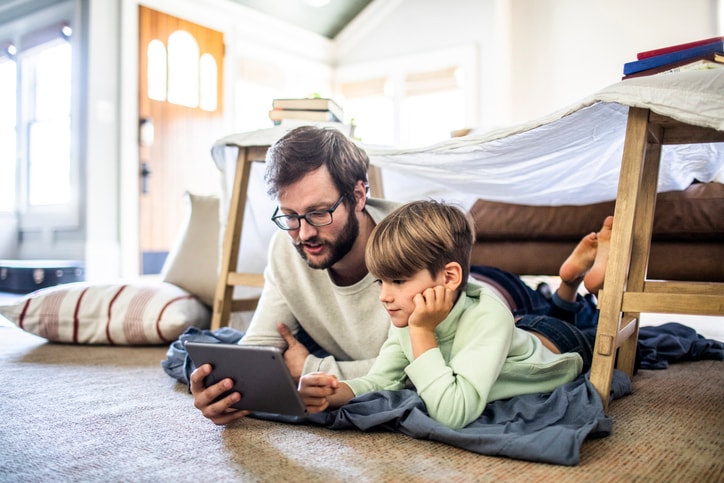
2. Use screens together
Use screens as a point of connection rather than as a way to check out. “We can ask what the latest TikTok trends are and what our kids think of them, or what our kids notice in peers who may seem consumed by their devices or certain platforms,” Edlynn says.
And just like learning to cook or repair an appliance side-by-side with an adult, kids can learn from using the internet with trusted adults, too. Hop into Minecraft with your kids, watch a drawing tutorial together or compete for high scores in Block Blast. It not only gives you insight into how your kids are using screens, but also creates the opportunity for bonding.
3. Outline specific screen safety rules
When your child begins to access screens independently or gets their first phone, outline the rules together. Some families even choose to sign a contract that includes topics such as:
- Time limits for use.
- The rules of safe searching online.
- Online etiquette when communicating with people.
- Privacy agreements about digital sharing.
4. Utilize digital safeguards
Discussion, education and trust should be the foundation of the digital conversation with kids — but that doesn’t mean parents shouldn’t also utilize helpful technology to keep their kids safe. From a tablet or phone’s built-in parental monitoring software to third-party apps, there are ways to limit the risks of the internet with a few clicks. Check out screen time monitoring apps like:
“The more openly and regularly we talk about these issues, [the more] we communicate that screens and technology are just another part of life to navigate.”
— Emily Edlynn, clinical psychologist and author
How can parents create a balanced approach to screen time?
Beyond teaching our kids the basic skills they need to stay safe online, parents are tasked with helping kids create a balanced approach to screen use. Overly strict limits can make kids anxious about when they will get screen time, but an unfettered approach can be just as detrimental.
- For young kids: Edlynn says rather than relying on timers, parents of younger children can consider building screen time into parts of their daily routine. For example, try suggesting an after-dinner wind-down where family members enjoy their favorite video game or watch some interesting YouTube videos together. This makes screen time feel like just another family activity, rather than the Holy Grail of entertainment.
- For tweens and teens: As kids age, create a routine that naturally limits screen time by balancing downtime with friends, extracurricular activities and screen-free family outings or board game nights. This helps older kids see screens as just part of their day — rather than the main focus. “This awareness can help them make better choices as teens, when we know screen time limits are not as useful,” says Edlynn.
One final screen time tip: Set a good example
It’s also important to practice what we preach, adds Rozmid. Beyond rules around screen time after lights-out or at the dinner table, she says parents need to teach kids to check in with themselves about their screen use.
“Model and encourage self-awareness around screen time behaviors,” she advises. “You can say things like, ‘I’m feeling overstimulated from too much TikTok. I’m going to go outside for a nature walk.’” This lets kids know that sometimes adults struggle with too much online time, too.
“Gradually scaffold autonomy for tweens and teens, so they learn to regulate their own usage responsibly and seek out other activities on their own,” concludes Rozmid. “Through healthy caregiver guidance, they’re more able to see that other screen-free activities can fill their needs.”