In this article
When I got my first puppy, I couldn’t wait to get into a new routine of strolling our neighborhood streets. Walking together seemed like it would be win, win: easy exercise for him, easy exercise for me — what could go wrong? A lot, it turned out.
Any time we were out and about, my pup preferred to either hide between my legs or sniff every corner rather than stroll at length on his leash. This resulted in tugging, pulling and frustration for everyone because, unfortunately, I’d fallen into a trap that gets many first-time dog owners.
“One of the biggest mistakes dog owners make is thinking regular walks are just about exercise,” explains Dr. Bethany Hsia, a veterinarian with over 13 years of experience. “The primary goal is to establish a positive connection and build trust. A ‘successful’ walk means the dog remains calm and shows no signs of excessive fear or aggression.”
So, how do you ensure a successful walk for both you and the dog? We spoke with experts to give you a play-by-play on how to prepare for a new walking routine, plus helpful dog walking tips and training tricks for making the most out of everyone one of your dog’s walks.
Key takeaways
- Dog walking is important for both a dog’s physical and mental health, providing exercise as well as natural enrichment through new sights, sounds and smells.
- The ideal dog walking frequency and length is going to depend on your dog’s breed, size, age and any health conditions they may have. High-energy dog breeds typically need longer, more frequent walks, while small and medium-size companion breeds may do better with shorter outings.
- Before walking a dog, take time to get to know their temperament, what commands they know and their familiarity with the places you’ll be exploring to make things go smoother.
Why is it so important to walk dogs in the first place?
You likely know the importance of exercise for yourself. Well, the same holds true for your dog. “Physically, walking helps maintain a healthy weight, strengthens muscles and improves cardiovascular health,” says Hsia, who is also the co-founder of CodaPet which specializes in end-of-life petcare services. “This reduces the risk of obesity and related diseases.”
Along with boosting a dog’s physical health, walking is also essential for their mental health, according to Alexandra Bassett, founder and head dog trainer at Dog Savvy, a positive reinforcement dog training center in Salt Lake City, Utah.
“Walking allows dogs to engage all their senses, helping to satisfy their natural curiosity about the world around them, which helps reduce boredom, stress and frustration at home,” Bassett says. “Daily walks, therefore, help dogs feel more fulfilled, balanced and emotionally satisfied, which often translates into better behavior at home.”
How often should you walk a dog, and is there an ideal length?
Generally, most adult dogs benefit from at least two 20-30 minute walks per day, according to Hsia. But the ideal frequency and length of walks depend on a dog’s specific age, health and energy level so there’s no one-size-fits-all answer.
For example, high-energy breeds like Huskies or German Shepherds often need substantial walks three times a day — sometimes an hour in length or more — to feel calm and settled at home, Basset explains. Active breeds also benefit from opportunities to run off-leash whether it be on a hike or in a safe, appropriate dog park setting, to fully expend all their energy.
“Walking allows dogs to engage all their senses, helping to satisfy their natural curiosity about the world around them, which helps reduce boredom, stress and frustration at home.”
— Alexandra Bassett, professional dog trainer
On the other hand, brachycephalic, or short-nosed, companion breeds, such as French bulldogs, may tire more quickly and require shorter outings, especially in hot weather, Bassett says. But one thing to keep in mind: While smaller or older dogs may not need hour-long walks, they still benefit greatly from daily walks and mental stimulation.
“Many toy breeds, like Shih Tzus or Yorkshire Terriers, are often under-exercised simply because they’re assumed to be lapdogs,” Bassett says. Experts recommend speaking to your veterinarian about the length and frequency of walks that is best for your dog if you’re unsure how to strike the best balance.
At what age can puppies go for their first walk?
You should wait to walk a new puppy until all proper vaccines are given to keep your dog safe from atmospheric diseases, usually about three months, explains professional dog trainer and behaviorist Sally Grottini with JustAnswer who has over three decades of experience.
“Once the puppy is cleared to go outside in public, the rule of walking time is five minutes per the puppy’s monthly age,” Grottini says. “So, around 3 months when shots are complete, walking for 15 minutes twice a day. This is for walks only, she notes, not additional bathroom breaks which will occur more frequently for puppies until they are potty trained.
What equipment do you need for walking a dog?
At a minimum, dog walkers need the following for their dogs:
- A well-fitting harness or collar.
- A sturdy leash.
- Properly fitted identification tags.
Here, experts offer a few tips for choosing gear that can making dog walking both safer and easier out of the gate:
How to choose a dog leash for walks
“A 6-foot standard leash is perfect for a walk,” Grottini says. “It allows the dog to go off the main road or pathway to urinate, but you also still have control.” Even if your dog is leash trained already, this is still the best leash to ensure your dog’s safety.
How to choose a dog collar for walks
For well-trained dogs that know how to heed your commands, Grottini is comfortable with using a standard collar with a buckle on walks. Just be sure to ensure buckle collars fit snug enough to prevent slipping off but loose enough for two fingers to fit underneath, Hsia notes.
For dogs still learning commands, however, Grottini suggests a Gentle Leader Headcollar or Halti collar, both of which apply safe pressure when a dog tugs. “These collars control the head, and can keep pullers in check,” Grottini says. “Where the head goes the body follows.”
How to choose a dog harness for walks
For larger or stronger dogs, Bassett recommends a lightweight, front-clip harness that provides guardians with more leverage by gently turning the dog at the shoulders when tension is created. “This discourages pulling without restricting natural movement through the shoulders and legs,” Bassett says.
For smaller dogs that tend to tug, back-clip, vest-style harnesses are Bassett’s favorite pick since they provide max comfort and safety for joints. “However, because of the back-clip design, they tend to encourage pulling rather than discourage it,” she notes. They also trap heat which can contribute to overheating so skip them if you live in a warm climate.
Dog walking tips for beginners, according to experts
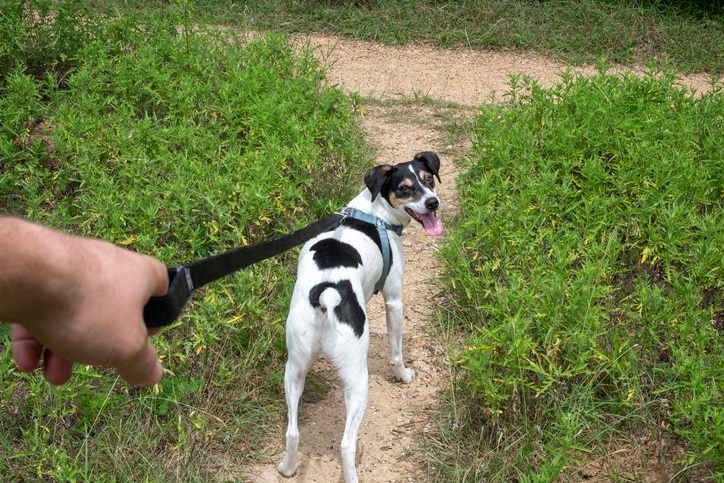
So, what exactly does a successful walk look like? “A dog that walks quietly, pays attention to the owner, while still being observant of their surroundings,” Grottini says. There should also be limited to no barking, no pulling, chasing, or trying to run away, she notes.
“Ultimately, the best walking gear is equipment that fits properly, allows full range of motion through the shoulders and legs without rubbing or digging, and matches the dog’s size, strength, climate, and activity level.”
— Alexandra Bassett
Whether you’re setting out on your puppy’s very first walk, or trying to troubleshoot issues that keep occurring on daily strolls, consider this your guide to ensure dog walking success.
1. Safety comes first, and it starts with the right gear
“Always use a sturdy leash and collar or harness, and ensure your dog is microchipped and wearing identification tags,” Hsia says. She also recommends avoiding walking during extreme weather conditions, whether it be very hot or very cold, to prevent heatstroke or frostbite.
“Ultimately, the best walking gear is equipment that fits properly, allows full range of motion through the shoulders and legs without rubbing or digging, and matches the dog’s size, strength, climate, and activity level,” Bassett adds.
2. Allow for plenty of stops and sniffing, especially on puppy walks
It’s very normal for puppies to feel overwhelmed during their first few outings and suddenly stop, sit, or “butt-plant” as they take everything in, Bassett explains. “This pause should be allowed — and even encouraged! — so the puppy can process their surroundings and feel confident enough to explore at their own pace, rather than being dragged along before they’re ready.”
Allowing plenty of sniffing is also important, Bassett adds, as sniffing is a dog’s primary way of gathering information no matter what age. “A calm, patient approach that allows for self-paced exploration sets the foundation for confident, enjoyable walks later in life,” Bassett says.
Hsia also recommends that all dog owners use plenty of praise and treats to create positive associations with the leash and outdoor environment.
3. Early training is the best way to stop your dog from pulling on the leash
“It’s important to remember that most dogs need some level of training to learn not to pull on a leash — a harness alone won’t solve the problem,” Bassett says. And the best time to start training your dog not to tug or yank on a leash? On your puppy’s first stroll.
“Rushing a puppy or constantly pulling them along can lead to frustration and, over time, may contribute to leash reactivity,” Bassett says. “A calm, patient approach that allows for self-paced exploration sets the foundation for confident, enjoyable walks later in life.”
4. Train your dog not only at home, but where you like to walk
“Keep in mind that dogs do not always carry over commands they have learned from one place to another place,” Grottini says. “This is where most people make mistakes. They feel that at home the dog listens perfectly, but then find the dog acts out in new places they go.”
To avoid missed commands, Grottini recommends training your dog physically in the places you like to frequent while walking. For example, If you enjoy walks near a lake, work on commands by the water, or if they prefer the city streets, have training sessions on the sidewalk.
5. Keep your leash short and your dog at your side while walking
Steer clear of extendable leashes which limit the amount of control you have over your dog, and if you have one, keep it locked and shorten to no more than six feet. This is because while sniffing and exploring should be encouraged to provide mental stimulation, it should still be closely monitored.
Grottini also advises only allowing sniffing on public property, never on someone else’s personal property, on a busy street, or a place with other dogs in the area that are off leash to ensure your dog doesn’t roam into a dangerous scenario.
6. Walk solo or only with other people and dogs you know
Grottini recommends only walking with other dogs if you know and trust their temperaments. “Do not try to force an introduction to other dogs you meet on the street,” she says. This can lead to leash pulling and anxiety, or worse, an encounter with an aggressive or frightened dog.
Have multiple dogs? Grottini still recommends walking them solo because you will have better control over one canine opposed to two. “Though you may trust your dogs together, there could be other dogs you encounter that are not watched properly or that get loose from their property,” she says. This can cause safety issues to multiply if you have multiple dogs on leash.
A final thought on mastering dog walking
The goal of walking your dog is to meet both your pet’s physical and mental needs. One of the biggest mistakes dog owners make is not providing enough mental stimulation during walks and treating them solely as bathroom breaks or exercise.
“To avoid these mistakes, incorporate mental enrichment into walks by allowing your dog to sniff and explore their surroundings,” Hsia says. The ideal walking distance, duration, and frequency will depend on your dog’s breed, age, and size, and be sure to tackle training and have the right gear before you head out of the house.
Struggling to find time to walk? “Hiring a dog walker or dog hikers can be very helpful for busy pet parents who may not always have the time to walk their dog,” Bassett says.