In this article
- Why is cat weight management so important in the first place?
- What is considered a healthy weight for cats?
- How to help your cat lose weight safely
- What if my cat starts begging for food?
- How long should it take for your cat to lose weight?
- Tips for navigating cat diet guilt to ensure weight loss success
For me, it felt like it happened overnight. One day, my spry young kitten was so busy bouncing off the walls that he could barely keep weight on between vet visits. The next, he was happily settled into a lazier indoor life — and overweight.
“Cat obesity is a widespread and growing problem,” says Dr. Bethany Hsia, a veterinarian with over 13 years of experience working with animals. In fact, according to the Association for Pet Obesity Prevention, more than 60% of cats are considered to be overweight or obese.
But despite it being more common than many pet owners may realize, hearing your cat needs to lose weight can come with a mix of isolating emotions, from guilt about how you got there to sheer anxiety wondering how on earth to implement an exercise routine for a feline.
Here’s what I wish I knew when I was tasked with helping my cat lose weight, including how to deal with cat diet guilt and tips for getting your pet in shape the right way.
Key takeaways
- Overweight cats often experience reduced mobility, decreased quality of life and a shorter life expectancy due to an increased risk of serious health conditions.
- There’s no “ideal” weight for cats, but rather a healthy body condition score (BCS) which is a rating of a cat’s body fat on a scale of 1-9. If you can’t feel your cat’s ribs easily without pressing, your cat is likely overweight, according to veterinarians.
- Helping cats lose weight successfully requires consistent meal portioning, regular monitoring, and patience since slow, gradual weight loss is safest for your cat.
Why is cat weight management so important in the first place?
Just like in humans, obesity in cats increases the risk of a slew of serious medical conditions, according to Hsia. These conditions include:
- Diabetes.
- Osteoarthritis.
- Urinary tract disease.
- Certain types of cancer.
- Fatty liver disease.
“In addition, heavy or overweight cats often experience reduced mobility, decreased quality of life and a shorter life expectancy,” Hsia says. But there is a silver lining: Some of the biggest factors that increase a cat’s obesity risk are avoidable, including sedentary lifestyles, unlimited access to food and high-calorie diets.
“To assess body condition score (BCS), owners should gently feel their cat’s ribs, spine and waist. In an ideal cat… ribs should be easily palpable without excess fat covering and a clear waist should be visible when viewed from above.”
— Dr. Bethany Hsia, a veterinarian
What is considered a healthy weight for cats?
There is no “ideal” weight for all cats, explains Dr. Katy Miller, a veterinarian specializing in small animal nutrition based in Seattle. “A healthy weight depends on breed, frame size, sex, age and body composition,” Miller says. “For example, a healthy adult domestic shorthair may weigh 8-12 lbs, while a healthy Maine Coon may weigh 15-20 lbs.”
Since the scale can be misleading, veterinarians rely on a hands-on assessment tool called body condition score (BCS) to measure obesity in cats. “It is a simple method that allows you to estimate body fat and determine a pet’s optimal body weight regardless of breed or size,” Miller says. So simple, in fact, that pet owners can do it themselves.
How to determine a cat’s body condition score
BSC is based on a standardized scale that ranges from 1 to 9, with 1 being emaciated and 9 being morbidly obese. A score of 4 or 5 is considered ideal, according to Hsia.
“To assess BCS, owners should gently feel their cat’s ribs, spine and waist,” Hsia says. “In an ideal cat with BCS at 4 or 5, ribs should be easily palpable without excess fat covering and a clear waist should be visible when viewed from above.”
Is my cat overweight?
If you can’t feel your cat’s ribs easily without pressing, your cat is likely overweight. “Your pet’s ribs should feel like running your fingers over the back of your hand,” Miller says.
How to help your cat lose weight safely
When it comes to helping cats lose weight, it’s not surprising that diet and exercise are paramount. But as a cat owner, figuring out how to formulate a cat weight loss plan can be a bit tricky – especially when you have a cat that loves food and treats. Here’s how to do it:
1. Switch to a weight management cat food
Weight management foods are formulated to help your cat shed pounds while maintaining lean muscle, according to Hsia, who regularly recommends weight loss diet foods that are lower in calories and fat but higher in fiber and protein to promote satiety and muscle maintenance.
Cat food brands like Royal Canin, Hill’s Prescription Diet, and Purina Pro Plan offer a few popular vet-approved weight loss diets. But a word of warning: Weight management foods are significantly more expensive which isn’t easy for pet parents to swallow.
If the added cost of going with a prescription diet isn’t in your budget, vets recommend switching to wet food at the very least. “Wet foods can be beneficial for satiety due to their higher moisture content,” Miller says, which makes them better for losing weight.
2. Manage meal portions based on your vet’s guidance
Your veterinarian will be the one to determine how much food (typically in grams) you should be feeding your cat each day based on their ideal weight and caloric needs. Once you know that number, here are Miller’s tips for controlling food portions to help your cat lose weight:
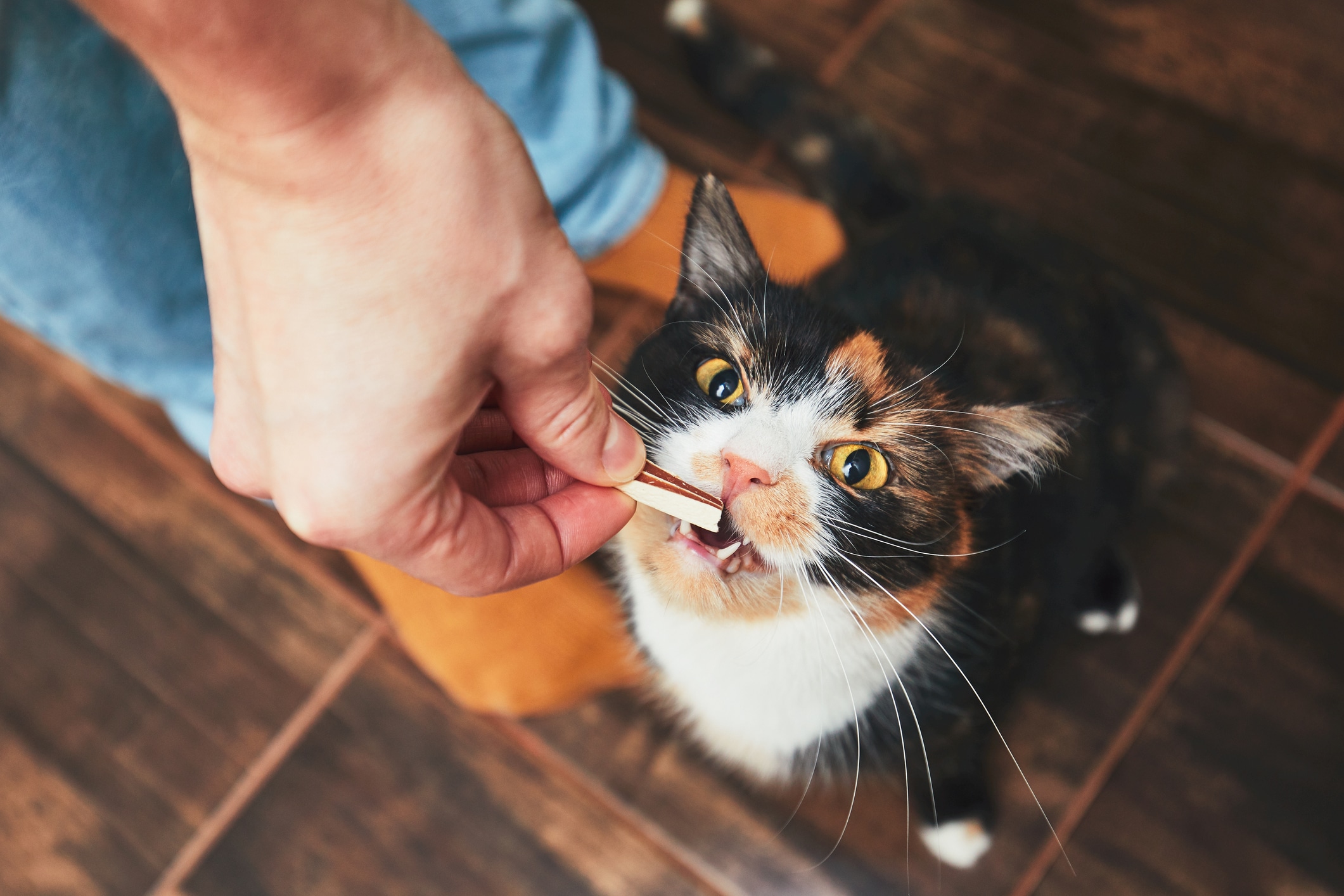
- Divide your cat’s daily allotment of food into smaller feedings to help prevent overeating and reduce hunger-driven begging.
- Pre-portion meals using a digital scale for accuracy and consistency.
- Be sure treats make up less than 10% of your cat’s daily calories, and ideally stick with low-calorie options.
The key to making sure portion control pays off? Consistency. “Even slightly overfeeding can derail great progress,” Miller says. “Always be consistent about measuring out food proportions.”
“My advice is to stick with a feeding schedule and ignore their begging behavior. Offer attention, such as play time, to distract them.”
— Dr. Bethany Hsia
3. Increase exercise — especially for indoor cats
Unfortunately, most cats will not self-exercise enough to lose weight, according to the pros. This is why increasing physical activity is vital for calorie burning. Here’s how to make it happen:
- Engage your cat in at least three 10- to 15-minute interactive play sessions each day using toys like feather wands, laser pointers, and treat-dispensing toys.
- Provide indoor cats with cat trees, climbing structures, and elevated perches to encourage natural climbing and hunting behaviors that burn calories.
- Utilize food puzzles that require the cat to “work” for their food to increase activity levels. Another fun trick? Let your cat “hunt” for their next treat by hiding small amounts of food around the house, Miller says.
What if my cat starts begging for food?
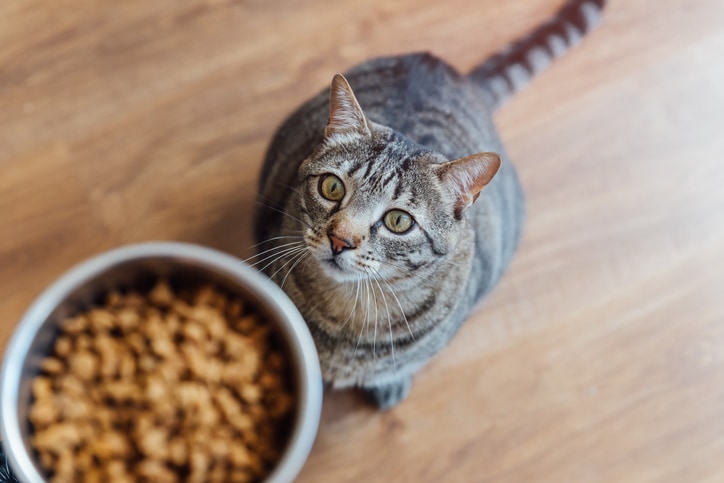
Let’s just say, I was subjected to a lot of meowing when I put my cat on a diet. So, if your cat begins to beg for food, you’re not alone. “My advice is to stick with a feeding schedule and ignore their begging behavior,” Hsia says. “Offer attention, such as play time, to distract them.”
How long should it take for your cat to lose weight?
Depending on how much weight a cat needs to lose, the full process may take 3-12 months, according to Miller. “Slow, steady progress is not only normal but desirable,” she emphasizes. “A safe rate of weight loss for cats is 0.5% to 2% of body weight per week, since losing weight too quickly can lead to hepatic lipidosis, a serious liver condition.”
How to monitor cat weight loss
The best way to monitor your cat’s progress is a combination of regular check-ins with both your pet and your vet. Here’s how to keep track:
- Weigh your cat every 2-4 weeks. Hsia recommends using a pediatric scale for accuracy.
- Reassess body condition regularly and chart the changes.
- Work with your vet to adjust calorie goals as the cat loses weight.
Tips for navigating cat diet guilt to ensure weight loss success
For pet parents feeling guilty about putting their cat on a diet, it’s important to understand that you are acting in your cat’s best interest to improve their health and longevity. Experts offer up these tricks will help alleviate guilt before it gets the best of you:
- Reframe the process. “Cat weight loss isn’t about restriction, punishment or taking something away,” Miller says. “It’s a medical treatment that improves comfort, mobility and longevity.”
- Focus on the positive. Even if begging occurs, remember that cats that are a healthy weight are more playful, more active and less prone to chronic disease.
- Replace extra food with affection. Whether it’s more playtime, grooming or environmental enrichment, swapping treats or extra meals with enjoyable experiences will strengthen the animal-human bond and ensure everyone feels happy.
- Set small achievable goals – and celebrate every loss! “Even 0.5 lbs for your 10-lb cat is a big deal,” Miller says. “That is like a 200-lb person losing 10 lbs!”