Care.com logo
Log inJoin now
Share your activity with more families
  • Reading Lessons Near Me

    Half-Day Super Shelling Tour

    5.0 (12)

    Powered by Viator

    Marco Island, FL

    What You’ll Find Expect sand dollars, lightning whelks, alphabet cones, tulip shells, and—on lucky days—the elusive Junonia. Captains share quick tips on reading bars, seams, and wrack lines, so every stop feels rewarding. Where We Go Routes commonly include Caxambas Pass, Kice Island, and “Second Chance” Shell Island in the Ten Thousand Islands. Captains choose the best beaches depending on the time of the year, tide, and local conditions. Learn as You Go Your Florida Master Naturalist–trained captain blends shelling technique with island history and marine-life insights. Families also hear gentle reminders about ethics: admire living shells and leave them where they belong. Duration: 4 hours Parking: FREE Departure: Private commercial docks 220 Goodland Dr W, Goodland FL 34140 (across from Stan’s Idle Hour) Time: Departures at 6:30am, 8:30am, 11:30am daily

    In-person

    All ages

    $199

    Princeville Botanical Gardens Tour and Chocolate Tasting Ticket

    4.8 (791)

    Powered by Viator

    Princeville, HI

    This 3-hour walking tour explores the nine acres of Princeville Botanical Gardens and includes a 50 minute gourmet chocolate tasting. You'll sample chocolate from around the world, north and south of the equator. You'll see our sacred cacao grove and learn about the history of cacao and how chocolate is processed as you sample our own delicious chocolate. Your expert guides will share stories of the gardens' development as well as a wealth of fascinating information about the plants, chocolate and the Hawaiian islands. You'll taste seasonal fruit samples, our garden tropical honey, and a variety of chocolate to keep your energy up as you explore our valleys. This is a chocolate and garden experience unlike any other on Kauai. PLEASE NOTE: If you or any one in your party has been sick or tested positive for COVID in the past few days, please DO NOT visit the gardens until everyone is past stages of spreading infection. Mahalo nui loa for your understanding.

    In-person

    2+ years

    $126

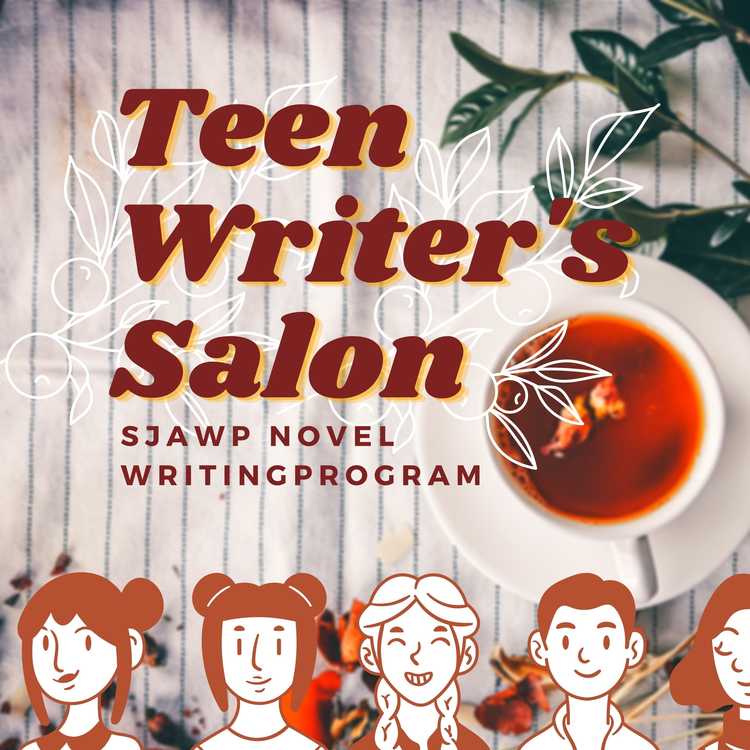
    Teen Writer’s Salon (hosted by SJAWP's Teen Novel Writing Program)

    100%

    by San Jose Area Writing Project

    SJAWP Novel Writing Program: Writer’s Salon & Workshop Calling all teen writers who want a community with whom to share writing without the commitment of a full length course! Our Teen Writer's Salon is a space in which students can write alongside other teens and workshop writing while making friends with other budding novelists. Our Writer's Salon will meet three times this fall for live zoom sessions that begin with a prompt and writing warm up followed by student readings of works in progress. We have built this space to allow students to stay connected to our Teen Writer's Institute programs and to experience the writing community offered by our Novel Writing Program. There will be no set lectures or assignments; rather, in this course, students will write together and receive peer feedback in a process facilitated by our author in residence, Hannah Jayne. Come join us and walk away with notes on a piece of writing, a peer group connected by the common pursuit of a creative writing life, and a clearer idea of how to make writing fit into your busy lifestyle! Zoom Classes will be held on Saturdays with tentative dates: February 28 - 11am–12:30pm March 28 - 11am–12:30pm April 25 - 9am-2pm (in person at SJSU) May 23 - 11am–12:30pm

    Online

    Ages 13-18 years

    $75

    BHCCClass: Python for Beginners 2026

    71%

    by Siliconvalley4U

    A. Course Overview: The Python Programming curriculum is a one-semester course covering topics typically found in introductory computer programming (coding) courses. Other introductory programming courses are not required; students merely need to have typical computer usage skills prior to starting this course. B. Teaching Strategies: The course material is designed to appeal to a variety of students, from traditional learners who thrive on written text to audio-visual students who enjoy a multi-media format. All content is delivered through an online system that allows students to work seamlessly both in the classroom and at home. The main chapters concentrate on Python programming and computer science topics. Certain states may require additional topics ranging from computing ethics and security to career exploration to the impact of computers on modern society. The course contains additional supplemental chapters at the end that can optionally be used to meet common state requirements. Teachers may choose to assign Supplemental Lessons as desired to meet state standards or student interest. The final “Creative Project” is optional and can be completed in small groups C. Course Planner: Some classes may move faster or slower than the suggested pace. The planner assumes students are working daily with approximately 45 to 60 minutes of class time. In most cases, the planner estimates one day per lesson (including the lesson quiz), one day per graded chapter activity (lab), and one day per chapter test. Some larger labs are assigned more time. D. Reading and Objectives: Chapter One: Fundamentals of Python • Introduction to Python • Running Python Programs • Writing Python Code Chapter Two: Working with Data • Data Types and Variables • Using Numeric Variables • Using String Variables Chapter Three: Input and Output • Printing with Parameters • Getting Input from a User • String Formatting Chapter Four: Making Decisions • Logical Expressions • The “if” Statement • Logical Operators • More Complex Expressions Chapter Five: Finding and Fixing Problems • Types of Errors • Troubleshooting Tools • Using the Python Debugger Chapter Six: Lists and Loops • Lists and Tuples • List Functions • “For” Loops • “While” Loops Chapter Seven: Numeric and Data • Dates and Times • Advanced Data and Time Management • Random Numbers • The Math Library Chapter Eight: Working with Strings • Character Data • String Functions • Input Validation with “try / except” Chapter Nine: Functions • Writing and Calling Functions • Function Inputs and Outputs • Local and Global Scope Chapter Ten: Python Classes • Thinking about Objects • Class Variables and Methods • Managing Class Files Chapter Eleven: Class Instances • Creating Objects with Instance Data • Instance Methods • Managing Objects Chapter Twelve: Food Fight Project • Introducing “Food Fight” Chapter Thirteen: Creative Project Requirements (Scale as desired to meet available time) Design • Project Life-cycles and teams Coding Testing Supplemental Chapter One: Python on Your Computer • Installing Python • Managing Projects • Using the Python IDE Supplemental Chapter Two: Computers and Individual exercises per lesson Modern Society • Global Computing Issues • Managing Your Digital Identity • Impact of Computing • Artificial Intelligence Classes will be taught online (Zoom Links will be provided once registration is done) Let's head towards our goal to become a Python Programming master!

    Online

    Ages 6-18 years

    $60

    BHCCClass: Python for Beginners 2026

    71%

    by Siliconvalley4U

    A. Course Overview: The Python Programming curriculum is a one-semester course covering topics typically found in introductory computer programming (coding) courses. Other introductory programming courses are not required; students merely need to have typical computer usage skills prior to starting this course. B. Teaching Strategies: The course material is designed to appeal to a variety of students, from traditional learners who thrive on written text to audio-visual students who enjoy a multi-media format. All content is delivered through an online system that allows students to work seamlessly both in the classroom and at home. The main chapters concentrate on Python programming and computer science topics. Certain states may require additional topics ranging from computing ethics and security to career exploration to the impact of computers on modern society. The course contains additional supplemental chapters at the end that can optionally be used to meet common state requirements. Teachers may choose to assign Supplemental Lessons as desired to meet state standards or student interest. The final “Creative Project” is optional and can be completed in small groups C. Course Planner: Some classes may move faster or slower than the suggested pace. The planner assumes students are working daily with approximately 45 to 60 minutes of class time. In most cases, the planner estimates one day per lesson (including the lesson quiz), one day per graded chapter activity (lab), and one day per chapter test. Some larger labs are assigned more time. D. Reading and Objectives: Chapter One: Fundamentals of Python • Introduction to Python • Running Python Programs • Writing Python Code Chapter Two: Working with Data • Data Types and Variables • Using Numeric Variables • Using String Variables Chapter Three: Input and Output • Printing with Parameters • Getting Input from a User • String Formatting Chapter Four: Making Decisions • Logical Expressions • The “if” Statement • Logical Operators • More Complex Expressions Chapter Five: Finding and Fixing Problems • Types of Errors • Troubleshooting Tools • Using the Python Debugger Chapter Six: Lists and Loops • Lists and Tuples • List Functions • “For” Loops • “While” Loops Chapter Seven: Numeric and Data • Dates and Times • Advanced Data and Time Management • Random Numbers • The Math Library Chapter Eight: Working with Strings • Character Data • String Functions • Input Validation with “try / except” Chapter Nine: Functions • Writing and Calling Functions • Function Inputs and Outputs • Local and Global Scope Chapter Ten: Python Classes • Thinking about Objects • Class Variables and Methods • Managing Class Files Chapter Eleven: Class Instances • Creating Objects with Instance Data • Instance Methods • Managing Objects Chapter Twelve: Food Fight Project • Introducing “Food Fight” Chapter Thirteen: Creative Project Requirements (Scale as desired to meet available time) Design • Project Life-cycles and teams Coding Testing Supplemental Chapter One: Python on Your Computer • Installing Python • Managing Projects • Using the Python IDE Supplemental Chapter Two: Computers and Individual exercises per lesson Modern Society • Global Computing Issues • Managing Your Digital Identity • Impact of Computing • Artificial Intelligence Classes will be taught online (Zoom Links will be provided once registration is done) Let's head towards our goal to become a Python Programming master!

    Online

    Ages 6-18 years

    $60

    Showing 43 - 47 of 47

    Related articles

    FAQs for finding Reading Lessons

    What kinds of reading programs are offered for children?

    Which age ranges are eligible to join reading classes?

    What steps should I take to sign my child up for reading classes?

    Additional Reading Lesson Services

    Reading Lessons in New York, NYReading Lessons in Philadelphia, PAReading Lessons in New Orleans, LAReading Lessons in San Mateo, CAReading Lessons in San Francisco, CAReading Lessons in Salt Lake City, UTReading Lessons in Houston, TXReading Lessons in Los Angeles, CAReading Lessons in Nashville, TNReading Lessons in Charleston, SC